
So, you’re curious about how gold prices, specifically XAU/USD, seem to dance with major US stock indexes like the Dow Jones (US30) and the Nasdaq 100 (US100)? It’s a common question, and honestly, it’s not as complicated as it sounds. Think of gold as a bit of a moody character; when things get shaky in the economy or globally, people tend to flock to gold. This often happens when stocks are taking a tumble. We’ll break down what drives gold, what makes the US30 and US100 move, and how they often influence each other. Understanding this gold-index connection can give you a better idea of what the market might do next.
Key Takeaways
- Gold often acts as a safe place for money when the economy looks uncertain, meaning its price can go up when stock indexes like the US30 and US100 are falling. This is a key part of the XAU/USD correlation.
- The US30, made up of 30 big, established companies, tends to reflect the overall health of the US economy. When the economy is doing well, the US30 usually rises, but gold might do the opposite if investors get worried.
- The US100 is heavily weighted towards big technology companies. Its movements are often tied to tech company profits and investor appetite for growth stocks, which can sometimes move independently of gold’s safe-haven appeal.
- Gold risk sentiment is a big deal. When global events cause fear, investors often buy gold, which can impact how the US30 and US100 perform, sometimes pushing them down.
- Watching how gold reacts to news can give you clues about market mood. If gold is climbing steadily, it might signal caution in the broader markets, affecting US30 correlation and US100 trends.
Understanding Gold’s Role as a Safe Haven
Gold has a long history of being seen as a reliable place to put your money, especially when things get a bit shaky in the wider economy. It’s not just about shiny jewelry; gold has a unique position in the financial world.
Gold as a Store of Value
Think of gold as a way to keep your wealth safe over time. Unlike paper money, which can lose value due to inflation, gold tends to hold its worth. This is partly because there’s only so much of it in the world, and it doesn’t degrade. This scarcity is a key reason why people turn to gold when they’re worried about their money losing purchasing power. It’s been used this way for centuries, long before modern financial systems existed.
Gold’s Response to Economic Uncertainty
When there’s a lot of doubt about how the economy is doing – maybe there are worries about recessions, political instability, or major global events – investors often look for assets that are less risky. Gold fits this bill. During these times, demand for gold usually goes up, which can push its price higher. It acts like a sort of insurance policy for your investments. If stocks or other riskier assets are dropping, gold might be going up, providing a bit of balance. This is a common pattern you’ll see when looking at how markets behave during uncertain periods. It’s a good idea to keep an eye on economic news to see how it might affect gold prices, much like understanding how to approach forex trading strategy.
The Impact of Inflation on Gold Prices
Inflation, which is basically when prices for everyday things go up and your money buys less, is a big deal for gold. When inflation starts to climb, the value of regular currency can start to shrink. People then often buy gold to protect themselves from this loss of buying power. So, when inflation is high, gold prices often follow suit. It’s a classic example of gold acting as a hedge against inflation, preserving wealth when the value of money is declining.
Here’s a simple way to think about it:
- High Inflation: Your cash buys less.
- Gold’s Appeal: Tends to hold or increase its value.
- Investor Action: Move money into gold to protect wealth.
Gold’s role as a safe haven isn’t just a theory; it’s a pattern observed throughout history. When confidence in traditional financial systems wavers, gold often emerges as a stable alternative, attracting capital seeking security and preservation of wealth.
The Dow Jones Industrial Average: A Reflection of Economic Health
Components of the US30 Index
The Dow Jones Industrial Average, often just called the US30, is a stock market index that tracks 30 of the biggest, most established companies in the United States. Think of companies that have been around for a while, are well-known, and generally considered stable. These are often called ‘blue-chip’ stocks. They aren’t usually the flashy, fast-growing tech companies, but rather the solid, dependable businesses that are deeply woven into the fabric of the American economy. You’ll find names like major banks, established consumer goods companies, and large industrial firms in its lineup. The specific companies can change over time, but the focus remains on large, influential corporations.
US30 as an Economic Barometer
Because the companies in the US30 are so central to the economy, the index itself is frequently used as a kind of thermometer for the overall health of the U.S. economy. When the US30 is climbing, it generally suggests that businesses are doing well, people are spending money, and the economy is expanding. Conversely, if the index is falling, it can signal that economic growth is slowing down or that there are concerns about the future. It’s a widely watched indicator because these 30 companies represent a significant chunk of economic activity.
The performance of the US30 is closely tied to consumer spending and business investment. When these are strong, the index tends to rise, reflecting a healthy economic environment. When they falter, the index often reflects that downturn.
Key Economic Indicators Influencing US30
Several economic signals can really move the US30. One of the most important is the jobs report, also known as the nonfarm payrolls report. This tells us how many new jobs were created in a month, and it’s a big clue about the economy’s strength. More jobs usually mean more people earning and spending, which is good for the companies in the Dow. Another factor is inflation. While gold often acts as a hedge against inflation, high inflation can sometimes hurt the purchasing power of consumers and impact company profits, which can affect the US30. Interest rate decisions by the Federal Reserve also play a role; higher rates can make borrowing more expensive for companies and consumers, potentially slowing economic activity and impacting the index. Finally, consumer confidence surveys give insight into how optimistic people feel about the economy, influencing their spending habits and, consequently, the US30 index.
Here are some key indicators to watch:
- Nonfarm Payrolls Report: Shows job creation, a direct measure of economic activity.
- Inflation Data (CPI): Indicates the rate at which prices are rising, affecting consumer spending and corporate costs.
- Federal Reserve Interest Rate Decisions: Influences borrowing costs for businesses and consumers.
- Consumer Confidence Surveys: Gauges public sentiment about the economy and future spending.
- Manufacturing and Services PMIs: Provide insights into the health of different economic sectors.
The Nasdaq 100: Tracking Technology Sector Performance
Composition of the US100 Index
The Nasdaq 100 index is a bit of a powerhouse, made up of over 100 of the largest non-financial companies listed on the Nasdaq stock exchange. Think of the big names you hear about all the time – Apple, Amazon, Microsoft, Nvidia. These aren’t just any companies; they’re giants, often leading the charge in innovation and market cap. When you look at the US100, you’re essentially getting a snapshot of how these major tech players are doing. It’s a pretty concentrated index, meaning the performance of a few key companies can really move the needle for the whole thing. This makes it a fascinating index to follow, especially if you’re interested in the tech world.
The Influence of Tech Earnings on US100
Earnings reports are a really big deal for the Nasdaq 100. Since the index is packed with tech companies, their quarterly earnings announcements can cause some serious swings. A strong earnings report from a company like Apple or Nvidia can send the entire US100 higher, while disappointing results can have the opposite effect. It’s not just about one company, though. Often, these tech giants report their earnings around the same time, creating a concentrated period of potential volatility. Keeping an eye on the earnings calendar is pretty important if you’re trying to anticipate the index’s next move. It’s a key factor that traders, including those involved in [day trading](https://forexsignalroom.com/blog/how-to-trade-the-us100-a-clear-framework-for-nasdaq-index-traders/), watch closely.
Market Capitalization and Index Movement
Market capitalization, or ‘market cap’, is a huge driver for the Nasdaq 100. This is simply the total value of a company’s outstanding shares. Because the US100 is weighted by market cap, the companies with the largest market caps have the biggest influence on the index’s price. So, if a massive company like Microsoft has a great day and its stock price jumps, it will have a more significant impact on the Nasdaq 100 than a smaller company’s stock moving. This means that shifts in the valuations of these tech titans can lead to substantial movements in the index itself. It’s a dynamic that really highlights the concentration of power within this particular index.
Exploring the XAU/USD Correlation with Indices
Gold Risk Sentiment and Market Dynamics
Gold, often called XAU/USD in the trading world, has this interesting habit of acting like a compass for overall market sentiment. When things get shaky in the global economy, investors tend to run for the perceived safety of gold. This flight to safety often means gold prices go up, while other riskier assets, like stocks, might be heading south. It’s like a seesaw – when one side goes up, the other tends to go down. This inverse relationship isn’t always perfect, but it’s a pattern traders watch closely.
How Gold Influences US30 Trends
The Dow Jones Industrial Average (US30) is made up of 30 big, established companies. Think of them as the backbone of the US economy. When gold is shining because of economic worries, it can signal that investors are pulling money out of the stock market, including the US30. This can put downward pressure on the index. On the flip side, if gold prices are falling, it might mean investors are feeling more confident and are willing to take on more risk, potentially pushing the US30 higher. It’s a bit of a dance between fear and greed.
The Connection Between Gold and US100 Movements
The Nasdaq 100 (US100), on the other hand, is heavily weighted towards technology and growth companies. These types of stocks can be more sensitive to economic shifts than the more established companies in the US30. When gold is in demand due to uncertainty, it often means investors are less keen on growth stocks, which can hit the US100 hard. Conversely, a strong risk appetite, often seen when gold is less attractive, can fuel rallies in the tech-heavy US100. The interplay between gold’s safe-haven appeal and the risk-on sentiment driving tech stocks is a key dynamic to observe.
Here’s a simplified look at how these can move:
- Gold Rises (Safe Haven Demand):
- US30 may fall (investors exit stocks).
- US100 may fall more sharply (tech is seen as riskier).
- Gold Falls (Risk Appetite Grows):
- US30 may rise (investors return to stocks).
- US100 may rise strongly (growth stocks are favored).
Understanding these general tendencies helps traders anticipate potential market reactions. It’s not a hard and fast rule, but a common pattern that emerges when investors are shifting their capital based on perceived safety versus potential growth.
Interpreting Market Sentiment and Gold
Gold’s Reaction to Geopolitical Events
When the world feels a bit shaky, people tend to look for a safe place to put their money. Gold has been doing this job for a really long time. Think about it: when there’s news about conflicts or major political shifts, gold prices often get a boost. It’s like investors are saying, ‘Okay, things are uncertain, let’s hold onto something solid.’ This isn’t just a gut feeling; it’s a pattern we see play out. Major global events can really move the needle on gold.
Assessing Investor Confidence Through Gold
Gold can act like a mood ring for the market. When investors are feeling confident and optimistic about the economy, they usually prefer to invest in riskier assets like stocks, especially tech stocks. This often means gold doesn’t do as well. But when confidence dips, and people get worried about their investments, they often turn to gold. So, watching gold’s price can give you a clue about how confident investors are feeling overall. It’s a bit like checking the pulse of the market.
The Role of Gold in Portfolio Diversification
It’s not just about trading; gold plays a role in how people build their investment portfolios. Many financial advisors suggest having a bit of gold in your mix. Why? Because it often behaves differently than stocks and bonds. When stocks are down, gold might be up, or at least holding steady. This helps to smooth out the ups and downs of your overall investments. It’s a way to spread out your risk.
Here’s a simple way to think about it:
- When investor confidence is HIGH:
- Stocks (like US30 and US100) tend to perform well.
- Gold might see less interest or even decline.
- When investor confidence is LOW:
- Stocks often struggle.
- Gold typically becomes more attractive as a safe haven.
Gold’s price movements aren’t always about immediate profit. Sometimes, it’s about preserving what you have when other assets are losing value. This ‘flight to safety’ is a well-documented behavior that influences how gold interacts with other markets.
Analyzing the US30 Correlation with Gold
Gold as a Counterbalance to US30
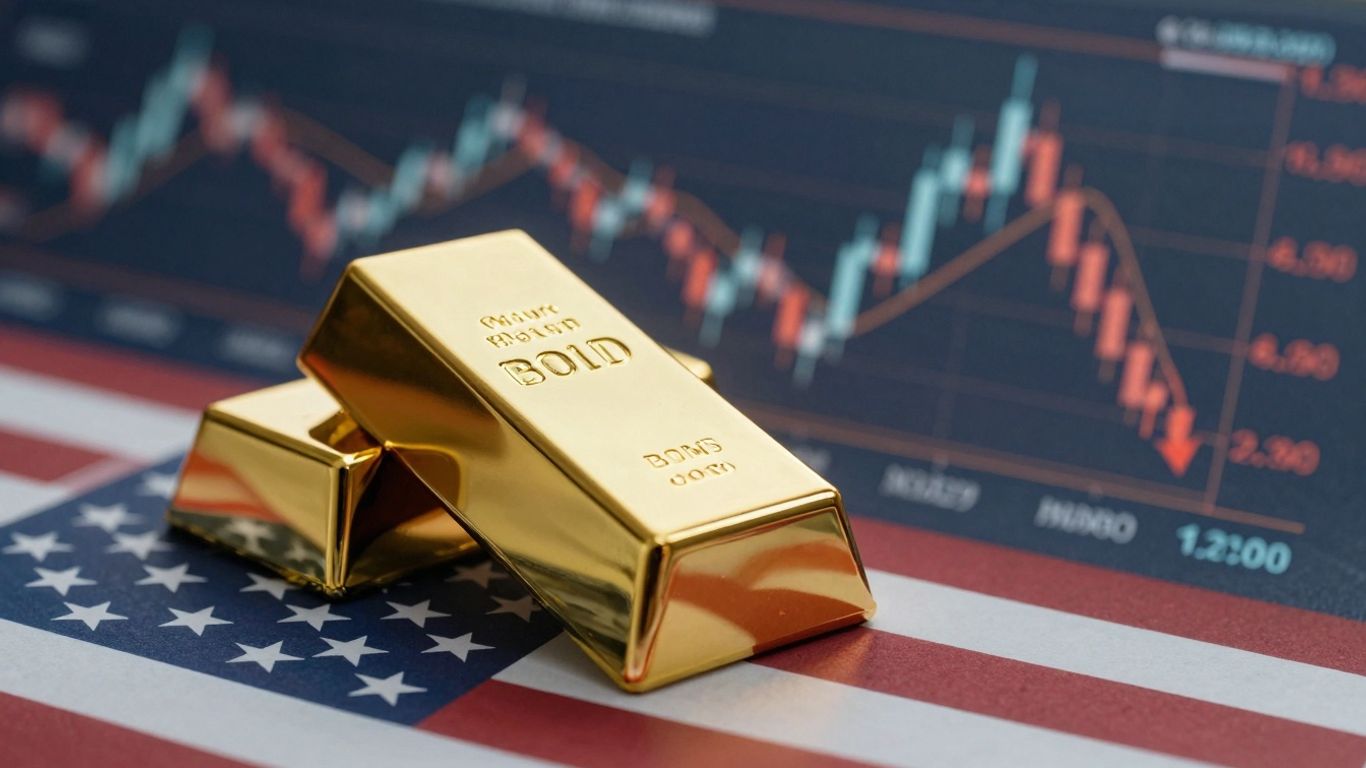
Gold and the Dow Jones Industrial Average (US30) often move in opposite directions, especially when economic uncertainty is high. Think of gold as a safe place to park your money when the stock market, represented by the US30, looks shaky. When investors get nervous about the economy, they tend to sell stocks, pushing the US30 down. At the same time, they often buy gold, which drives its price up. This inverse relationship isn’t always perfect, but it’s a pattern many traders watch closely.
Economic Downturns and US30/Gold Dynamics
During periods of economic trouble, like recessions or major financial shocks, this counterbalance effect becomes more pronounced. The US30, made up of 30 large, established companies, is seen as a reflection of the broader economy’s health. If businesses are struggling, consumer spending is down, and unemployment is rising, the US30 will likely fall. Gold, on the other hand, is seen as a tangible asset that holds its value. When the value of paper money and stocks is in question, gold often becomes more attractive. It’s like a safety net for wealth.
Understanding Investor Flight to Safety
When markets get turbulent, investors often engage in what’s called a ‘flight to safety.’ This means they move their money out of riskier assets, like stocks in the US30, and into safer ones. Gold is a prime example of a safe-haven asset. Its long history as a store of value, combined with its physical nature, makes it appealing when confidence in financial systems wavers. This shift in investor behavior directly impacts both the US30 and gold prices, creating a noticeable correlation, or often, an inverse one.
Deciphering US100 Trends in Relation to Gold
When we look at the Nasdaq 100 (US100), we’re really talking about the big players in the tech world. Think Apple, Amazon, Nvidia – these are the companies that make up a huge chunk of this index. Because they’re so large, their performance can really swing the US100 around. Now, how does gold fit into this picture? It’s not always a direct, one-to-one relationship, but there are definitely connections.
Tech Sector Vulnerability and Gold’s Appeal
Tech companies, especially the high-growth ones found in the Nasdaq 100, can be quite sensitive to economic shifts. When the economy is humming along, these companies often do great, and investors are happy to pour money into them. But when there’s uncertainty, or signs of a slowdown, investors tend to get nervous. They might start pulling money out of riskier assets, like growth stocks, and look for a safer place to park their cash. That’s where gold often comes in. Gold’s reputation as a safe haven means it can attract capital when investors are feeling skittish about the stock market, including the tech-heavy Nasdaq 100. This doesn’t mean gold always goes up when the US100 goes down, but the general sentiment can push them in opposite directions.
Growth vs. Value: Gold’s Impact on Indices
It’s helpful to think about the difference between growth stocks (which the Nasdaq 100 is full of) and value stocks (more common in something like the Dow Jones). Growth companies are expected to grow earnings at an above-average rate compared to their market. Value stocks, on the other hand, are typically companies that appear to be trading for less than their intrinsic or book value. When investors are feeling optimistic and confident about the future, they often favor growth stocks, which can drive the US100 higher. However, if that confidence wavers, perhaps due to rising interest rates or inflation fears, the appeal of gold as a store of value can increase. This shift in preference can lead to money flowing out of growth sectors and into gold, potentially putting downward pressure on the US100. It’s a bit of a tug-of-war between risk-on and risk-off sentiment.
The Interplay of Risk Appetite and Gold Prices
Market sentiment is a big driver here. When investors have a high risk appetite, they’re more willing to invest in assets that have the potential for high returns, like tech stocks. This generally pushes the US100 up. Gold, in this scenario, might see less interest. But when that risk appetite fades – maybe because of geopolitical tensions, unexpected economic data, or worries about inflation – investors tend to become more risk-averse. They seek out assets perceived as safer, and gold is a prime example. This flight to safety can cause gold prices to rise while the US100 might struggle or decline. Understanding these shifts in investor psychology is key to interpreting the relationship between gold and the Nasdaq 100. It’s all about where investors feel their money is most secure and likely to grow in the prevailing economic climate. For those looking to understand these dynamics better, exploring a trading blueprint for Gold can offer insights into how various factors influence its price movements.
Ever wondered how the US100 stock market index moves when gold prices change? It’s a fascinating connection that can offer clues for traders. Understanding this relationship helps you see the bigger picture in the markets. Want to learn more about these connections and how to use them? Visit our website for expert insights and trading strategies.
Wrapping It Up: Gold, US30, and US100
So, we’ve looked at how gold, or XAU/USD, can sometimes give us clues about what might happen with the US30 and US100 stock indexes. When things get shaky in the economy, people often turn to gold as a safer place for their money. This can cause gold prices to go up. At the same time, if investors are worried about the economy, they might pull back from stocks, especially the big tech companies in the US100 or the more established companies in the US30. It’s not a perfect one-to-one match every time, of course. Markets are complex. But understanding this connection can help you see the bigger picture when you’re looking at these different markets. Keep an eye on gold, and it might just help you get a better sense of where the US30 and US100 could be headed.
Frequently Asked Questions
Why is gold considered a safe place to put money when things get shaky?
Gold is like a trusty old friend. It’s rare, lasts a long time, and people have valued it for ages. When the economy feels wobbly or prices for everything start climbing (inflation), folks tend to buy gold. They see it as a way to protect their money from losing value, kind of like a shield against hard times.
What is the Dow Jones (US30) and how does it show how the economy is doing?
The Dow Jones, or US30, is like a report card for 30 big, well-established American companies. Think of companies that make things people always need. Because these companies are so tied into how well the country’s economy is doing, the US30 often moves up when the economy is strong and down when it’s weak. It’s a good way to see the general health of the business world.
What kind of companies are in the Nasdaq 100 (US100) and why do they matter?
The Nasdaq 100, or US100, is mostly about the biggest technology companies in America, like the ones that make your phone, search engine, or computer chips. These companies are huge and can really influence the whole index. When they do well and make a lot of money (their ‘earnings’), the US100 usually goes up. If they stumble, the index can fall.
How does gold’s price movement affect the US30 and US100?
Often, when people are worried about the economy, they sell stocks (like those in the US30 and US100) and buy gold. So, if gold prices are going up, it might mean investors are nervous, and the US30 and US100 could be going down. Conversely, if people feel confident and are buying stocks, gold might not be as popular, and the indices could rise.
Can big world events change the price of gold and the stock market?
Absolutely! Major news, like disagreements between countries or big political changes, can make people nervous. This often causes them to seek safety in gold, pushing its price up. At the same time, this uncertainty can make investors pull their money out of stocks like those in the US30 and US100, causing those to drop.
Is there a simple way to think about the relationship between gold and the US100 (tech stocks)?
Think of it like this: when investors are feeling brave and want to chase big potential profits, they often invest heavily in fast-growing tech companies (US100). But if they get scared or worried about the future, they might pull back from those riskier tech stocks and prefer the safety of gold. So, a strong interest in the US100 might mean less interest in gold, and vice versa.


