
The British pound versus the Australian dollar, or GBP/AUD, is a currency pair that can really move. It’s not just about what’s happening in the UK or Australia; it’s a whole mix of things. Think interest rates, how much things cost (inflation), and even what’s going on in the wider world. If you’re looking at this pair, you need to keep an eye on a lot of different economic signals. This article breaks down what makes GBP/AUD tick, so you can get a better handle on its ups and downs.
Key Takeaways
- GBP/AUD is influenced by the economic health of both the UK and Australia, including their GDP, inflation, and interest rates.
- Central bank decisions from the Bank of England (BoE) and the Reserve Bank of Australia (RBA) are major drivers, with rate differentials playing a big role.
- Australia’s commodity prices, especially iron ore, significantly impact the AUD’s strength, while global risk sentiment can favor GBP during uncertain times.
- Successful trading often involves a blend of looking at economic news (GBP/AUD fundamentals) and using chart patterns (technical analysis).
- Past events like financial crises and policy shifts offer lessons, but the future outlook for GBP/AUD depends on ongoing economic data and central bank actions.
Understanding the GBP/AUD Dynamics
The GBP/AUD currency pair, often called the ‘Pound/Aussie’, pits the British pound against the Australian dollar. It’s a popular choice for traders because it often shows clear trends and can be influenced by a mix of global and local economic events. Basically, when you trade GBP/AUD, you’re betting on whether the UK economy will do better than Australia’s, or vice versa.
The GBP/AUD Currency Pair Explained
When you see GBP/AUD, the first currency, GBP (British Pound), is the base currency, and the second, AUD (Australian Dollar), is the quote currency. If the GBP/AUD rate goes up, it means the pound is getting stronger relative to the Aussie. For example, if the rate moves from 1.85 to 1.90, it takes more Australian dollars to buy one British pound. This pair is interesting because it links two economies with different strengths – the UK’s service-based economy and Australia’s resource-heavy one. Watching the GBP/AUD live chart can give you a real-time feel for these shifts.
The Crucial Role of Fundamental Analysis
To really get a handle on what makes GBP/AUD move, you can’t just look at price charts. You’ve got to dig into the fundamentals. This means looking at the actual economic health of both countries. Think about things like how much each country is producing (GDP), how fast prices are rising (inflation), and what their central banks are up to with interest rates. These underlying economic factors are what drive currency values over time. Ignoring them is like trying to drive without looking at the road.
Key Economic Indicators for GBP/AUD
Several data points are super important for tracking GBP/AUD. Keep an eye on these:
- Interest Rates: Decisions from the Bank of England (BoE) and the Reserve Bank of Australia (RBA) are huge. Higher rates usually attract foreign money, strengthening a currency.
- Inflation: High inflation can force central banks to raise rates, potentially boosting their currency, but it can also signal economic trouble.
- GDP Growth: Strong economic growth generally supports a currency, while weak growth can drag it down.
- Employment Data: Low unemployment and rising wages often point to a healthy economy.
- Trade Balance: A country exporting more than it imports usually sees its currency strengthen.
Understanding these indicators helps paint a picture of which economy is likely to outperform, directly impacting the GBP/AUD exchange rate. It’s about seeing the bigger economic story unfold between the UK and Australia.
Central Bank Policies and Interest Rate Impact
Central banks are like the conductors of an economy’s orchestra, and their main instrument is often the interest rate. For the GBP/AUD pair, understanding the tune the Bank of England (BoE) and the Reserve Bank of Australia (RBA) are playing is super important.
Bank of England’s Stance on Interest Rates
The Bank of England, or BoE, has a big job: keeping prices stable and the economy growing. They do this mainly by setting the UK’s interest rates. The folks on their Monetary Policy Committee (MPC) decide where rates should be. If inflation is creeping up too fast, they might hike rates to make borrowing more expensive, which can cool things down. If the economy is sluggish, they might lower rates to encourage spending and investment. Market watchers are always glued to BoE announcements, trying to guess their next move. These expectations alone can move the pound.
Reserve Bank of Australia’s Monetary Strategy
Down Under, it’s the Reserve Bank of Australia (RBA) calling the shots. Similar to the BoE, the RBA focuses on inflation and economic growth. Their main tool is the official cash rate. If the Australian economy is booming and inflation is a concern, the RBA might raise rates. If things are slowing, a rate cut could be on the table. They look at all sorts of data, from GDP figures to employment numbers, to make these calls. Keeping an eye on the RBA’s statements and economic outlook is key for anyone trading the Aussie dollar.
How Rate Differentials Influence GBP/AUD
So, how does this all affect GBP/AUD? It really comes down to the difference in interest rates between the UK and Australia, often called the rate differential. If the BoE is hiking rates while the RBA is holding steady or cutting, that makes holding pounds more attractive than holding Australian dollars. Investors might sell AUD and buy GBP, pushing the GBP/AUD pair higher. The opposite can happen too. If the RBA is more aggressive with rate hikes than the BoE, the Australian dollar could strengthen against the pound. It’s a constant tug-of-war based on where each central bank thinks the economy needs to go. Unexpected policy shifts can cause quite a stir in the currency markets, sometimes leading to significant price swings.
Central bank decisions aren’t made in a vacuum. They react to a wide range of economic data, global trends, and their own forecasts. This means that even when a central bank seems predictable, surprises can and do happen, impacting currency values.
Here’s a simplified look at how rate changes might play out:
- BoE Hikes Rates, RBA Holds: GBP tends to strengthen against AUD.
- RBA Hikes Rates, BoE Holds: AUD tends to strengthen against GBP.
- Both Hike: The impact depends on which bank is seen as more aggressive or which economy is performing better.
- Both Cut: Similar to hiking, the relative action matters most.
Traders often look at forward guidance from these banks, which are hints about future policy. This can be just as impactful as an actual rate change. For instance, if the BoE signals future rate hikes, the pound might start strengthening even before the hikes occur. Understanding these central bank policies is a big piece of the puzzle when trying to figure out where gold prices might be headed, as they influence overall market sentiment and risk appetite.
Inflation and Economic Growth Drivers
Inflation and economic growth are two big pieces of the puzzle when you’re looking at how the GBP/AUD pair might move. Think of them as the engine and the fuel for the economies of the UK and Australia. When these are chugging along nicely, or sputtering, it really affects how traders see the pound and the Aussie dollar.
The Influence of UK Inflation Trends
Inflation in the UK is a pretty big deal for the pound. The Bank of England has a target, usually around 2%, and they watch it like a hawk. If prices are rising too fast, it can eat away at people’s spending power, which isn’t great for the economy. On the flip side, if inflation is too low, it can signal that demand is weak. The latest figures show UK inflation sitting at 2%, which is right on target, suggesting a level of price stability. However, it’s not just the headline number; the Bank of England looks at all sorts of things to figure out what’s going on. Consumer and business confidence also play a role here. When people feel good about the economy, they tend to spend more, which can boost growth but also potentially push inflation up. It’s a constant balancing act.
Australia’s Inflation Landscape
Down in Australia, the Reserve Bank of Australia (RBA) also keeps a close eye on inflation, aiming for a range of 2-3%. Like in the UK, inflation affects how much people can buy and influences business decisions. Australia’s economy is pretty diverse, with mining, services, and agriculture all contributing. Recent data suggests that the economy is growing, and unemployment has been relatively low, which is generally a good sign. But if inflation starts to creep up too quickly, the RBA might feel pressure to raise interest rates, and that can make the Australian dollar more attractive to investors. Monitoring consumer and business confidence here is also key, as it gives a sense of how willing people are to spend and invest, which in turn impacts economic activity.
GDP Growth: A Tale of Two Economies
Gross Domestic Product (GDP) is basically the total value of everything produced in a country. It’s a primary measure of economic health. The UK’s GDP is showing some growth, currently at 0.2%, indicating a slow but steady expansion. Australia, on the other hand, has seen consistent economic growth, supported by strong exports and domestic demand. This growth is important because it often leads to more jobs and higher incomes. When one economy is growing much faster than the other, it can create a divergence in their currencies. For instance, strong Australian GDP figures might support the AUD, while sluggish UK growth could weigh on the GBP. It’s also worth remembering that Australia’s reliance on global trade means that international trade disputes can sometimes throw a wrench in the works, impacting their export markets and overall economic outlook. Understanding these growth drivers helps traders get a better picture of the long-term economic health of both nations.
Commodities and Global Sentiment’s Role
Commodity Prices and AUD Strength
Australia’s economy is pretty tied up with things like iron ore, coal, and gold. When the prices for these commodities go up, the Australian dollar (AUD) tends to get stronger. It makes sense, right? If the world wants more of what Australia sells, the demand for its currency goes up. On the flip side, if global demand dips, especially from big buyers like China, the AUD can take a hit. This connection means that sometimes, the GBP/AUD pair can move based on what’s happening in commodity markets far away from both the UK and Australia.
Global Risk Sentiment: Risk-On vs. Risk-Off
Markets don’t always move in a straight line; they go through cycles. Sometimes, investors feel pretty confident and are in a ‘risk-on’ mood. This is when they’re more likely to buy stocks and currencies that offer higher returns, like the AUD. Other times, fear takes over, and it’s ‘risk-off’ mode. In this environment, people tend to play it safe, buying up bonds and favoring currencies seen as more stable, like the British Pound (GBP). If global worries spike—maybe due to economic trouble, political unrest, or a financial crisis—investors often flock to safer assets, which can give GBP a boost.
Correlation with Other Markets
It’s not just about what’s happening directly in the UK or Australia. The GBP/AUD pair can also show patterns when you look at other markets. For instance:
- Commodity Prices: As mentioned, rising prices for key Australian exports like iron ore often see the AUD strengthen.
- Stock Markets: The performance of major stock indexes like the UK’s FTSE 100 and Australia’s ASX 200 can sometimes influence their respective currencies.
- US Dollar Index (DXY): Often, a stronger US dollar can put pressure on other major currencies, including both GBP and AUD.
Watching these connections can sometimes give you a heads-up about potential moves in GBP/AUD before they fully play out.
Understanding these external influences is key. It’s easy to get caught up in just the UK and Australian economic data, but the reality is that global forces, especially commodity prices and general market sentiment, play a significant role in how GBP/AUD behaves. Ignoring them means missing a big piece of the puzzle.
Navigating GBP/AUD with Trading Strategies

Short-Term Trading Approaches
When you’re looking at the GBP/AUD pair for quick moves, there are a few ways traders like to play it. One common method is breakout trading. This involves watching for the price to consolidate, meaning it’s moving sideways in a tight range, and then jumping in when it breaks decisively above resistance or below support. It’s all about catching that initial burst of momentum. Another popular approach for those with fast reflexes is day trading, which involves opening and closing positions within the same trading day. This often means looking for smaller, quicker profits and requires a keen eye on short-term price action and volatility. Scalping is an even more aggressive form of short-term trading, aiming for very small profits on numerous trades throughout the day.
Here’s a quick look at some short-term tactics:
- Breakout Trading: Wait for price to move out of a defined range.
- News Trading: React to economic data releases or central bank announcements.
- Scalping: Execute many trades for small gains, often within minutes.
For short-term plays, especially with a volatile pair like GBP/AUD, having a solid plan for managing risk is non-negotiable. This means knowing exactly where you’ll exit if the trade goes against you.
Long-Term Fundamental Trading
If you prefer to take a more patient approach, long-term fundamental trading might be more your speed. This strategy focuses on the bigger economic picture. You’d be looking at things like the long-term interest rate policies of the Bank of England versus the Reserve Bank of Australia, or how sustained inflation trends in either country might affect their respective currencies. For example, if you believe the UK economy is set for a period of stronger growth and the BoE will keep rates higher for longer than the RBA, you might consider a long-term buy position on GBP/AUD. This approach requires a good grasp of macroeconomic trends and a willingness to hold positions for weeks, months, or even longer.
Key considerations for long-term traders:
- Interest Rate Differentials: The gap between UK and Australian interest rates can create opportunities, especially if one central bank is expected to be more hawkish than the other.
- Economic Growth Outlook: Comparing GDP forecasts for the UK and Australia provides insight into which economy might outperform.
- Trade Balances: A country’s trade surplus or deficit can influence currency strength over time.
The Importance of Technical Analysis Tools
Regardless of whether you’re a short-term or long-term trader, technical analysis tools can be incredibly helpful. They provide a way to visualize market sentiment and potential turning points based on historical price movements. Tools like moving averages can help identify the overall trend direction – if GBP/AUD is consistently trading above its 50-day and 200-day moving averages, it suggests an upward trend. The Relative Strength Index (RSI) is another popular indicator, helping traders spot when a currency pair might be overbought or oversold, potentially signaling a reversal. Bollinger Bands are also useful for gauging volatility and identifying potential breakout points. Using a combination of these indicators can give you a more rounded view of the market.
Commonly used technical tools:
- Moving Averages: Smooth price data to identify trends.
- Relative Strength Index (RSI): Measures the speed and change of price movements to identify overbought/oversold conditions.
- Bollinger Bands: Show volatility and potential price extremes.
It’s also vital to remember that technical analysis works best when combined with a solid understanding of the fundamental factors driving the GBP/AUD pair. They are complementary, not mutually exclusive.
Historical Events and Future Outlook
Lessons from Past Market Shocks
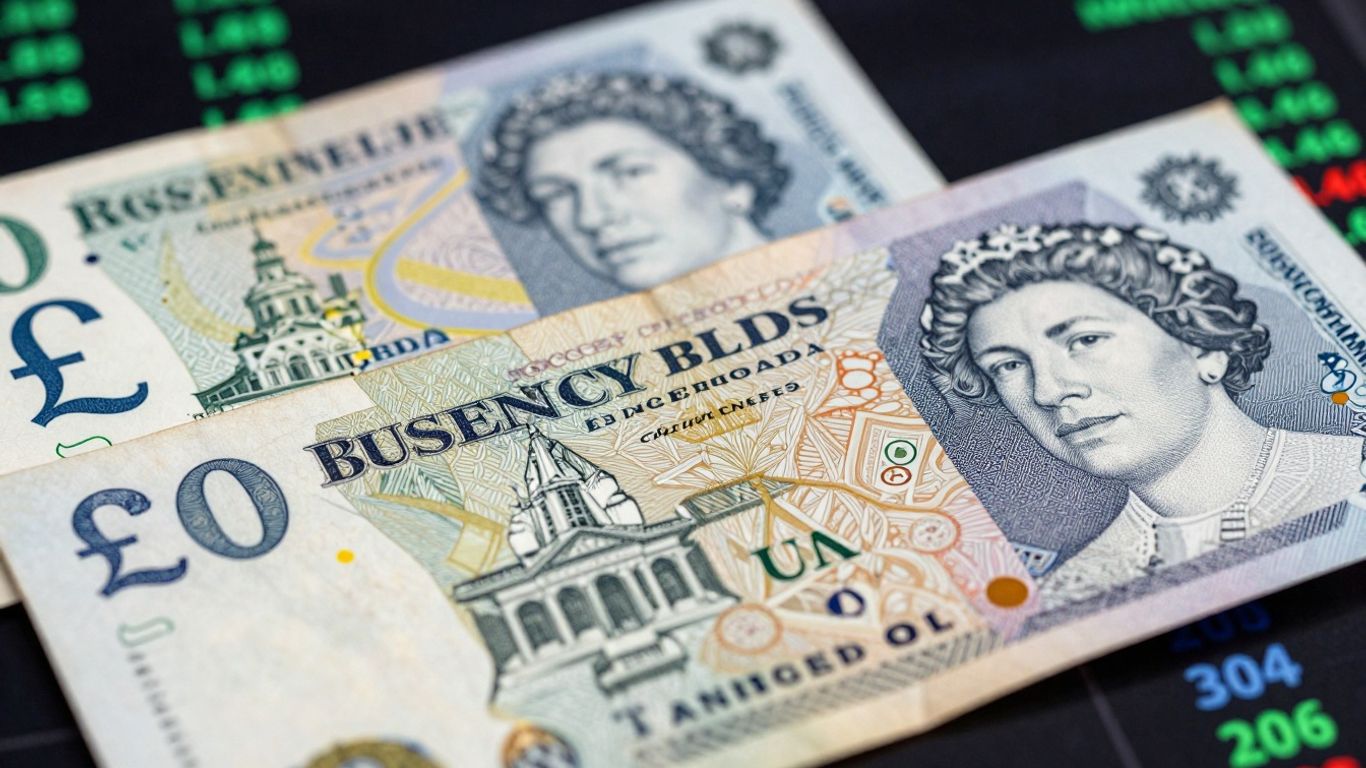
Looking back at history can give us some clues about how the GBP/AUD pair might react when things get a bit wild. Remember the global financial crises of 2008 and 2020? During those times, investors often moved their money to what they saw as safer assets, and the British Pound sometimes benefited from that flight to safety, leading to some pretty big swings in the GBP/AUD. On the flip side, when demand for things like iron ore and coal really takes off, the Australian Dollar tends to get a boost. These commodity price surges can really move the needle. And of course, we can’t forget how central bank decisions, like interest rate changes, have historically caused major ups and downs for this currency pair. Paying attention to these past patterns can help us get a better idea of what might happen in the future.
Forecasting GBP/AUD in the Near Term
Predicting currency movements is never an exact science, but we can look at current trends. For 2025, if the UK economy manages to pull ahead of Australia’s, we might see the GBP/AUD pair climb. However, Australia’s economy is heavily tied to commodities, and if there’s steady demand for its exports, it could put a cap on how much the Pound can gain. It looks like we could be in for some back-and-forth action. The Bank of England and the Reserve Bank of Australia are both dealing with inflation and trying to steer their economies, which adds another layer of complexity. Keep an eye on their interest rate policies and any new economic data that comes out.
Potential Scenarios for the Coming Years
Thinking further out, say into 2026, we can imagine a couple of different paths for GBP/AUD.
- A Stronger Pound Scenario: This could happen if the UK economy really picks up steam, proving doubters wrong. If the Bank of England keeps interest rates higher than Australia’s, the Pound becomes more appealing. Also, if there’s a global economic slowdown that hurts demand for Australian exports, the Aussie Dollar might weaken.
- A Stronger Aussie Dollar Scenario: This might occur if Australia’s economy remains steady, perhaps supported by consistent demand from countries like China for its resources. Meanwhile, the UK’s growth could slow down, maybe still dealing with the after-effects of Brexit. In times of global uncertainty, investors sometimes favor the Australian Dollar.
Most analysts are currently suggesting that GBP/AUD will likely trade within a range, maybe between 1.88 and 2.02, unless some major unexpected event shakes things up. It’s a constant question: will the Pound gain the upper hand, or will the Aussie Dollar hold its ground?
Geopolitical events, unexpected policy shifts, or major global economic downturns can quickly alter the expected trajectory of currency pairs like GBP/AUD. Traders need to stay informed and be ready to adapt their strategies when such events occur.
It’s also worth remembering that political developments, like the ongoing adjustments after Brexit, can have a significant impact on the UK’s economic landscape. Similarly, Australia’s economic health is closely linked to global commodity markets. These factors, combined with the monetary policies of the respective central banks, create a dynamic environment for the GBP/AUD pair.
Looking back at past market events helps us understand today’s trading world. We can learn from what happened before to make better choices for the future. Want to know more about how these historical moments shape our trading strategies? Visit our website to explore how we use this knowledge to guide your investments.
Wrapping It Up
So, we’ve seen that the GBP/AUD pair isn’t just some random number. It really does react to what’s happening economically in both the UK and Australia. Things like interest rates from the Bank of England and the Reserve Bank of Australia, plus inflation numbers and how strong their economies are, all play a part. Even what’s going on with commodities and global moods can shake things up. Keeping an eye on these economic signals and knowing when to use tools like charts can help you make smarter moves. It’s a lively pair, for sure, and staying informed is your best bet for finding those trading chances.
Frequently Asked Questions
What exactly is the GBP/AUD currency pair?
The GBP/AUD pair shows you how much one British pound (GBP) is worth compared to one Australian dollar (AUD). Think of it like trading one type of money for another on a global scale. It’s a popular choice for traders looking to bet on the economic strength of the UK versus Australia.
Why is looking at economic news important for GBP/AUD?
Economic news, like reports on jobs or how much a country is producing, tells us how healthy an economy is. When one country’s economy looks strong and the other looks weak, it can make their money’s value change a lot compared to each other. This is super important for trading pairs like GBP/AUD.
How do interest rate changes affect GBP/AUD?
Central banks, like the Bank of England and the Reserve Bank of Australia, set interest rates. If one country raises its rates while the other keeps them low, money tends to flow to the country with higher rates to earn more. This can make that country’s currency stronger, directly impacting the GBP/AUD rate.
Does what happens with oil or gold prices matter for GBP/AUD?
Yes, definitely! Australia sells a lot of things like coal and iron ore to other countries. When prices for these raw materials go up, Australia’s economy often does better, making the Australian dollar stronger. So, the cost of these goods can really move the AUD part of the pair.
What’s the difference between short-term and long-term trading for GBP/AUD?
Short-term trading means making quick trades, maybe lasting only minutes or hours, often reacting to sudden news. Long-term trading involves holding a position for weeks or months, focusing on bigger economic trends and patterns. Both need different ways of thinking and watching the market.
Can past events help predict future GBP/AUD moves?
Looking at what happened during big events like the 2008 financial crisis or the COVID-19 pandemic can offer clues. These events show how the GBP/AUD pair reacted to global worries or economic booms. While history doesn’t repeat exactly, understanding past reactions can help traders prepare for similar situations.


